

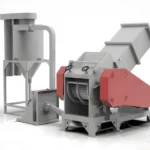
 uPVC Profile & Pipe Granulator
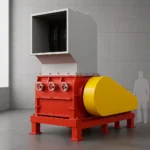 Granulators for Hard Plastics
Introduction
In an era where plastic waste continues to burden landfills and oceans, the demand for accessible recycling solutions is greater than ever. Small and medium-sized enterprises — think of boutique producers, community recycling centers, or laboratories — face the challenge of efficiently processing PET bottles without investing in extensive, industrial equipment. This is where the compact bottle shredder comes into play: a powerful machine that converts discarded PET bottles into valuable flakes for reuse. In this article, we highlight what a smaller bottle shredder should be able to do and what to look out for when making your purchase. This way, you can get your recycling life up and running, optimize your process, and contribute to the sustainability trend.
What is a Small Bottle Shredder?
A small plastic bottle shredder is essentially a mechanical device designed to reduce plastic bottles (mainly PET, sometimes HDPE/PP) into smaller, uniform pieces — typically ‘flakes’ or granulate — to simplify downstream processes (melting, extrusion, pelletizing). Unlike large-scale industrial installations, these compact units are intended for limited space and moderate throughput (e.g., a few tens to a hundred kilograms per hour).
The core of the machine consists of rotating blades or rotors that cut or tear the plastic along fixed anchors, powered by an electric motor power (often 1-5 kW for smaller units). Modern designs include safety systems such as overload protection and emergency stop — essential in compact workspaces.
In terms of configuration, the difference between single-shaft and double-shaft shredders is important:
- Single-shaft shredders generally produce finer, cleaner flakes and are suitable for relatively clean input.
- Double-shaft machines are more robust, can handle larger or contaminated streams, and are suitable for post-consumer materials with labels/caps.
Sector trends point to increasingly energy-efficient models (e.g., with VFD – variable frequency drives) and stricter regulations (such as the EU directive on plastic packaging) that compel recyclers to achieve measurable recycling performance.
What should you look for in your choice?
When purchasing a compact bottle shredder, it is important to find the right balance between capacity, quality, maintenance, and ease of use. Below is an overview of critical features.
Compact design & placement
In smaller installations, space is often limited. Choose models with a footprint under approximately 2 m² and a weight that allows for relocation if necessary (e.g., < 200 kg). A modular frame or plug-and-play solution simplifies integration into existing workflows.
High-quality cutting blades and output size
The quality of the blades directly determines the consistency of the final product. Look for hardened steel or special alloy materials, adjustable blade spacing for different bottle sizes (250 ml → 2 L), and coatings that minimize wear. A good shredder produces flakes of, for example, 10-20 mm, which facilitates downstream processes such as washing or pelletizing.
Energy and noise optimization
Operational costs should not be underestimated. Modern shredders have noise enclosures (< 70 dB), eco-mode settings, and VFD drives, which can reduce energy consumption by up to 20-40% compared to older models.
Safety and maintenance ease
Sensors for blade wear, automatic reversal upon jamming, and a touchscreen HMI for diagnostics and resilience are crucial. Verify certifications such as CE or UL. Quick access to parts and easily interchangeable blade units reduce downtime.
Throughput & Versatility
Choose a capacity that matches your process needs: entry-level units process for example 20-50 kg/hour; medium-sized models 80-150 kg/hour or more. Pay attention to compatibility with different plastics (PET, HDPE, PP) and additional options such as caps/film processing.
By focusing on these points, you make an investment that is more than just a machine: it becomes a strategic tool with returns thanks to lower waste processing costs and potential revenue from recycled flakes.
Buyer's Guide: Step by Step
Navigating the offer of small bottle shredders can be overwhelming. Here is a structured approach to help you make the right choice.
1. Assess Your Operational Needs
Start by estimating your daily bottle input and desired output. For example: a café recycling program may suffice with a 30 kg/hour unit; a small bottling plant might need 150 kg/hour or more. Consider space and power supply (220V vs 380V).
2. Determine Material Compatibility
Not all plastics are as easy to shred. PET bottles are predominant, but can be contaminated with labels, residue, or caps. Conduct tests if possible or choose models with integrated de-labeling or automatic pre-treatment. Poor input can otherwise lead to higher wear and reduced output quality.
3. Cost vs Long-Term Value
Your investment extends beyond the purchase price. Calculate the payback: if you shred 1 ton/month and save €200/ton (waste disposal + material value), the payback period may be under a year. Note the warranty period (>2 years) and the local service network.
4. Performance Indicators Comparison
Inquire about shredder efficiency (kg/kWh), uniformity of flakes (% outside tolerance), and customer experiences (maintenance and downtime costs). Independent tests or references enhance reliability.
5. Sustainability & Integration
Modern shredders offer IoT connectivity, data monitoring for CO₂ footprint tracking, and modularly expandable frames. These features are valuable for ESG reporting and forward-thinking.
With these steps, you choose a shredder that not only meets your current requirements but also grows with your recycling setup.
Why choose Rumtoo?
As a specialized supplier for plastic recycling, Rumtoo offers clear advantages — tailored to your business needs and our market position.
- Industry Experience & Expertise: Rumtoo has supplied over 200 installations in 40+ countries (according to internal data). This demonstrates experience with international projects and process knowledge in diverse markets.
- Tailor-Made SolutionsInstead of delivering a standard machine, we don't offer a ‘one-size-fits-all’. We analyze your material stream (type of bottle, contamination level, throughput requirements), and advise on the optimal shredder configuration—single or double shaft, power fitting, integration with label removal, and more.
- Reliability and ROI FocusOur customers typically achieve a payback period of 18-24 months, partly due to our focus on maintenance intervals, energy consumption, and output quality.
- Aftercare & Service NetworkWe take care not only of delivery but also of installation, training, spare parts, and support. This minimizes your downtime risk and increases your uptime.
- Sustainability & Future-ProofingWith our solutions, you not only acquire a machine but also address the increasingly stringent requirements around circularity, recycled plastic content, and ESG reporting.
In short: by choosing Rumtoo, you choose a partner rather than just a supplier—and thereby for process certainty, quality output, and sustainable growth.
Conclusion
A small bottle shredder is a smart, scalable entry into effective plastic recycling—suitable for working with PET bottles in a compact setup. By choosing a machine that is technically well specified, fits your material stream, and comes from a reliable supplier (such as Rumtoo), you not only create valuable material from waste but also strengthen your position in the circular economy.
Are you ready to streamline your recycling process? Contact Rumtoo today for a free analysis or customized quote — and start turning bottles into business value. Your sustainable future is within reach.

 English
  Dutch
Dutch  Polish
  Italian
  German
  French
  Spanish