
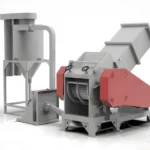
 uPVC Profile & Pipe Granulator
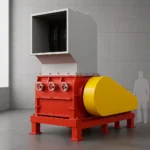 Granulators for Hard Plastics
Investing in a plastic recycling machine represents a critical decision for companies focusing on sustainable production and waste management. In 2025, the cost of plastic recycling machines varies significantly, depending on capacity, automation, and technical configuration. This comprehensive guide provides insight into all cost components, so you can make a well-considered investment decision.
The global market for plastic recycling machines is estimated to be $3.82 billion in 2025 and is expected to grow at a compound annual growth rate of 6.4% to 2032. This growth reflects the increasing demand for circular economy solutions and stricter environmental regulations in Europe and worldwide.
Price Overview of Plastic Recycling Machines by Category
The cost of a plastic recycling machine is primarily determined by the type of equipment, processing capacity, and level of automation. We distinguish three main categories that each serve a specific market segment.
Compact Granulators
Suitable for small to medium-sized production facilities with processing volumes of 50 to 200 kilograms per hour. These machines include basic automation and are ideal for single-stream recycling.
Integrated Washing Lines
Mid-range solutions with capacities of 200 to 800 kilograms per hour, including washing, drying, and sorting. These systems offer higher throughput and better quality control for contaminated waste materials.
Full Recycling Lines
Industrial systems with processing capacities starting from 800 kilograms up to several tons per hour. These complete solutions include automated feed systems, multiple washing stations, optical sorters, and pelletizing systems.
Important to Know: The listed prices do not include installation, training, and logistics. Taking these additional costs into account, the total investment is generally 15 to 25 percent higher than the purchase price of the machine itself.
Cost Drivers in the Purchase of Recycling Equipment
Technical Specifications and Capacity
Processing capacity is the largest cost driver. Machines with higher throughput require more robust components, more powerful motors, and more advanced control systems. A granulator with a capacity of 100 kilograms per hour costs significantly less than a system that processes 1,000 kilograms per hour, as the mechanical load and material quality requirements increase exponentially.
Modern systems from manufacturers such as At its core, a wet grinding and granulating machine (also known as a wet granulator or washing granulator) is a heavy-duty industrial reducer designed to process large quantities of water during the cutting process. It is specifically developed for the plastic recycling sector to process contaminated post-consumer or post-industrial plastics. integrate energy-saving technologies that can reduce operating costs by 20 to 30 percent. These initial additional costs are often recouped within two to three years through lower energy bills.
Automation Level and Process Management
Manual systems require constant operators and offer limited process control. Semi-automated machines with touchscreen interfaces and sensor-based monitoring increase the investment by 8,000 to 15,000 euros, but significantly reduce labor costs. Fully automated lines with PLC control, data logging, and remote monitoring represent the highest investment category but maximize efficiency and product quality.
Material Type Specialization
General-purpose recycling machines process standard thermoplastics such as polyethylene (PE) and polypropylene (PP). Specialized equipment for polyethylene terephthalate (PET) bottles, polystyrene (PS), or mixed plastic streams requires customized cutting geometries, washing colors, and temperature controls. This specialization increases the purchase price by 10 to 25 percent but delivers superior output quality.
Calculate Total Cost of Ownership
A thorough financial analysis must extend beyond the purchase price. The Total Cost of Ownership (TCO) over a period of five to ten years includes multiple components that determine the actual investment.
Operational Expenses
Energy consumption is the largest recurring cost. A medium-sized recycling line consumes an average of 45 to 75 kilowatt-hours of electricity per hour of operation. At Dutch industrial electricity rates of approximately 0.12 euros per kilowatt-hour, this results in 1,350 to 2,250 euros per month for a two-shift operation.
Water consumption for washing systems is generally 0.5 to 2 cubic meters per ton of processed material. Modern closed water recirculation systems reduce this consumption by 60 to 80 percent, which offsets the initial additional costs of 5,000 to 12,000 euros within three years.
Maintenance Costs and Replacement
Preventive maintenance costs an average of 3 to 5 percent of the purchase price per year. This includes lubricants, filter replacement, and routine inspections. Wear parts such as cutting knives, screen plates, and conveyor belts require periodic replacement, amounting to an annual investment of 2,000 to 8,000 euros, depending on material abrasiveness and processing volume.
Advantages of New Machines
- - Full factory warranty of 2 to 5 years
- - Latest energy-efficient technology
- - Compliant with current EU safety standards
- - Customizable configuration to specific needs
- - Comprehensive training and technical support
- - Lower maintenance costs in the first years
Disadvantages of Used Equipment
- - Limited or no warranty available
- Higher energy costs due to older technology
- Unknown maintenance history and wear
- Possible incompatibility with modern systems
- Shorter remaining lifespan
- Limited options for capacity expansion
Return on Investment Calculation
The payback period of a plastic recycling machine depends on several variables, including processing volume, material costs, and market prices for recycled granulate. A realistic ROI analysis requires insight into these components.
Revenue from Recycled Material
The market price for high-quality recycled PET granulate fluctuates between 0.65 and 0.95 euros per kilogram, depending on purity and consistency. HDPE granulate yields between 0.55 and 0.80 euros per kilogram, while mixed plastics generate 0.30 to 0.50 euros per kilogram. These prices are 30 to 50 percent below virgin material, but the cost savings and sustainability benefits compensate for this difference.
A company that processes 500 kilograms per day (over 250 working days per year) produces 125 tons of recycled material annually. With an average revenue of 0.70 euros per kilogram, this generates 87,500 euros in annual income, which can recoup a machine investment of 55,000 euros within three years, even before savings on waste processing costs.
Cost Savings in Waste Processing
Industrial waste processing costs an average of 120 to 180 euros per ton in the Netherlands, depending on the region and contract terms. By recycling 125 tons internally annually, a company can save between 15,000 and 22,500 euros on external processing costs. This saving significantly shortens the payback period and is often overlooked in traditional ROI calculations.
Decision Framework for Machine Selection
- Start with an analysis of your material stream: the type of plastic, contamination level, and consistency of supply determine the required technology.
- Calculate your processing needs with a safety margin of 30 percent for growth and production peaks.
- Evaluate your personnel availability and choose the level of automation that fits your operational model.
- Compare at least three suppliers on technical specifications, service conditions, and reference projects.
- Request a trial run with your own material to validate performance under realistic conditions.
- Integrate financing options such as lease structures or subsidies for circular economy projects.
- Plan an implementation project including operator training, safety protocols, and an optimization period.
Financing Options and Subsidy Opportunities
Various financing structures make the investment in recycling equipment more accessible for businesses with limited cash flow budgets. Operational leasing spreads the costs over a period of three to seven years with monthly payments of 1.5 to 2.5 percent of the purchase value.
European and national subsidy programs for the circular economy provide significant support. The European Regional Development Fund (ERDF) subsidizes up to 35 percent of investment costs for SMEs that invest in sustainable production technology. National schemes such as the Environment Investment Allowance (MIA) and Energy Investment Allowance (EIA) reduce the tax burden by 27 to 45 percent of the investment.
Leasing Structures vs. Direct Purchase
Operational leasing retains capital for other business activities and typically includes maintenance contracts, thereby reducing operational risks. Financial leasing offers tax advantages through depreciation and interest deduction, while ownership ultimately transfers to the lessee. Direct purchase maximizes long-term cost efficiency but requires significant initial capital expenditure.
Selection Criteria for Reliable Suppliers
The choice of your machine supplier significantly influences the success of your recycling operation. Rumtoo Machine stands out for its comprehensive after-sales support, modular system architecture, and proven performance in over 60 countries. When evaluating suppliers, you should pay attention to several aspects.
Technical Support and Spare Parts
Inquire about response times for technical support and the availability of critical spare parts. European suppliers generally offer a delivery time of 24 to 48 hours for standard components, while Asian manufacturers may require three to six weeks. Local service networks reduce downtime and maintain productivity.
Check if the supplier provides access to technical documentation, parts catalogs, and remote diagnostics. Modern systems with IoT connectivity facilitate preventive maintenance through real-time monitoring of performance parameters and early detection of deviations.
Reference Projects and Customer Experiences
Visit existing installations in similar industries to see the machines in action and exchange experiences with current users. Focus on operational uptime, maintenance frequency, and the quality of the output material. Ask about challenges during implementation and how the supplier addressed them.
Expert Tip: Ask suppliers for performance guarantees with specified processing capacity, energy consumption, and output quality. Serious manufacturers back their claims with measurable service level agreements and performance certificates from independent testing institutions.
Future Developments in Recycling Technology
The recycling industry is evolving rapidly through technological innovations and stricter environmental standards. Artificial intelligence and machine learning optimize sorting processes with accuracy above 95 percent, while traditional methods achieve 70 to 85 percent. These technologies increase the initial investment by 15,000 to 40,000 euros but significantly improve material purity and throughput.
Chemical recycling complements mechanical processes by depolymerizing difficult-to-recycle mixed plastics into virgin-quality raw materials. Although current systems are still capital-intensive (400,000 to 2 million euros), economies of scale and subsidies make this technology more accessible to medium-sized processors by 2027.
Practical Implementation Steps
A successful implementation requires careful planning and phasing. Start with a feasibility study that analyzes your material flow, quantifies processing volumes, and defines output specifications. This phase typically lasts two to four weeks and prevents costly miscalculations.
Select your machine and supplier based on technical suitability, total ownership costs, and service capacity. Reserve sufficient space for equipment, material storage, and maneuvering space (minimum 150 to 300 square meters for mid-scale systems). Ensure adequate electricity provisions (usually 3-phase 400V with 60 to 150 ampere capacity) and water connections.
Plan a five-day operator training program, including safety protocols, routine maintenance, and troubleshooting. Document operational procedures and establish performance indicators to facilitate continuous improvement. Monitoring energy consumption, output quality, and machine uptime optimizes operational efficiency throughout the lifecycle.
Conclusion: Investing in Sustainable Production
The cost of a plastic recycling machine ranges from €9,000 for compact units to over €200,000 for complete industrial systems. The right choice depends on your specific processing needs, material type, and desired level of automation. By focusing on total cost of ownership instead of just the purchase price, you maximize the return on investment and sustainability benefits.
Reputable suppliers such as At its core, a wet grinding and granulating machine (also known as a wet granulator or washing granulator) is a heavy-duty industrial reducer designed to process large quantities of water during the cutting process. It is specifically developed for the plastic recycling sector to process contaminated post-consumer or post-industrial plastics. provide technical expertise, modular solutions, and comprehensive support that make the difference between a successful and problematic implementation. With available subsidies, favorable financing structures, and rising costs for virgin materials, the business case for in-house recycling becomes increasingly compelling.
Investing in recycling technology positions your organization as a leader in the circular economy, reduces dependence on volatile raw material markets, and meets increasing sustainability requirements from customers and regulators. The time to act is now, while market conditions are favorable and technology is proven and affordable.

 English
  Dutch
Dutch  Polish
  Italian
  German
  French
  Spanish