

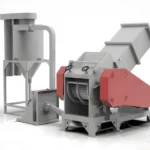
 uPVC Profile & Pipe Granulator
 Granulators for Hard Plastics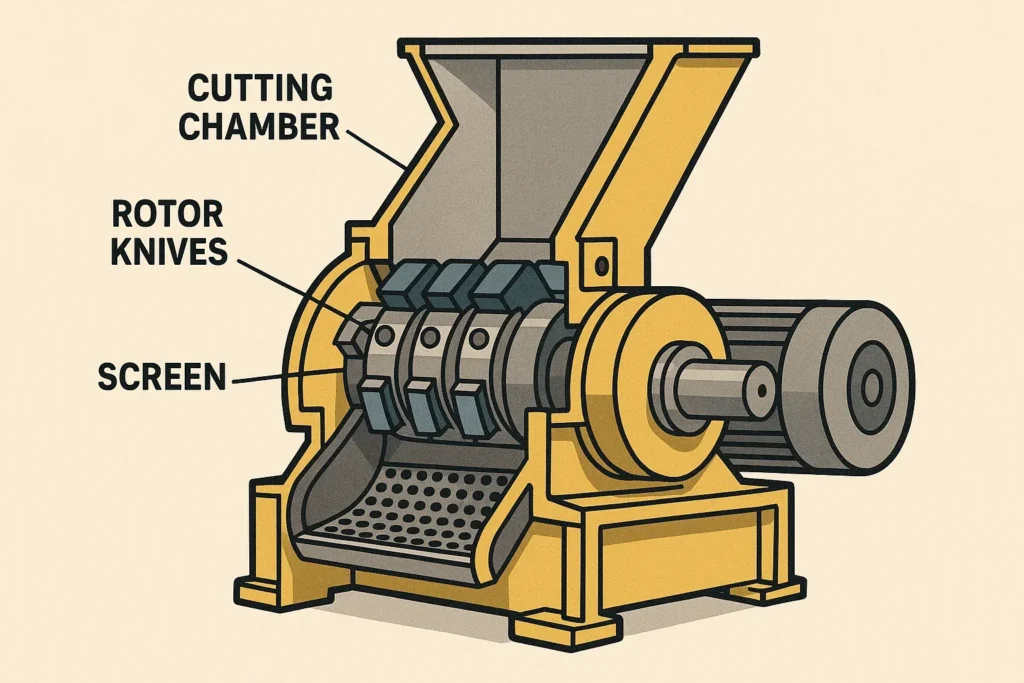
Choosing the Right Screen Size for Your Plastic Granulator
Selecting the appropriate screen size for your granulator's sieve is essential for optimizing granulation processes, ensuring efficiency, and maximizing output quality. This comprehensive guide is specifically designed for industrial equipment buyers, engineers, and technical staff, providing clear, directly applicable insights. kunststofgranulator Understanding the Role of Plastic Granulator Screens.
A sieve in a plastic granulator plays a critical role by controlling the particle size of the feedstock. Screens with correctly sized openings ensure consistent particle dimensions, which influence subsequent processing steps, including injection molding, extrusion, and recycling.
Factors Influencing the Selection of Screen Size.
When choosing the right sieve size, several critical considerations come into play:
Material Type:
- Different plastics, such as polyethylene (PE), polypropylene (PP), or polyvinyl chloride (PVC), require different sieve sizes based on their processing properties. Desired Particle Size:.
- Gewenste Deeltjesgrootte: The required particle size has a significant impact on the screen size. Smaller screen openings produce finer particles, while larger openings result in coarser granulate.
- Throughput: A higher throughput may require larger screen openings, balancing output and quality.
Impact of Screen Size on Equipment Performance
It is crucial to understand how the screen size affects the performance of the granulator:
| Screen Opening Diameter | Particle Size | Throughput Efficiency | Energy Consumption |
|---|---|---|---|
| Small | Fine | Lower | Higher |
| Medium | Average | Optimal | Average |
| Large | Coarse | Higher | Lower |
- Small Seven: Produce finer particles, beneficial for precision injection molding, but may increase energy consumption and reduce throughput.
- Medium Seven: Offer a balance between quality and efficiency, suitable for most general applications.
- Large Seven: Offer higher throughput with lower energy consumption, suitable for less precise bulk processing.
Step-by-Step Guide to Selecting Screen Size
- Define Your Requirements:
Clearly establish your final product specifications, including particle size and application. - Analyze Material Properties:
Evaluate the type of plastic, its hardness, and elasticity. Bronze plastics can efficiently utilize smaller screens, while tougher materials may require larger openings. - Calculate Production Volume:
Align the screen size with production goals, considering the ratio between throughput and quality. - Test and Optimize:
Conduct tests with different screens to empirically determine the optimal balance between particle size, throughput, and energy efficiency.
Tips for Optimal Maintenance of Granulator Screens
- Regularly inspect and clean screens to maintain peak operational efficiency.
- Immediately replace screens showing signs of wear or damage to prevent downtime and reduced productivity.
Conclusion: Achieving Optimal Performance
The choice of the correct mesh size for the plastic granulator screen directly affects productivity, efficiency, and product quality. By carefully evaluating your requirements, understanding material properties, and systematically testing screen sizes, you can ensure that your granulation processes deliver optimal performance. Use this guide as a foundation for making informed, strategic decisions about equipment, such as the Standard Plastic Granulators, for sustainable operational success.

 English
  Dutch
Dutch  Polish
  Italian
  German
  French
  Spanish