

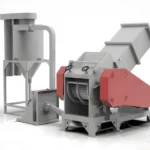
 uPVC Profile & Pipe Granulator
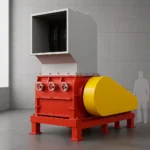 Granulators for Hard Plastics
Polyvinyl chloride (PVC) is one of the most versatile plastics, used in a wide range of products from rigid construction pipes to flexible floor coverings and medical hoses. This versatility stems from the ability to formulate the material in countless ways. However, for companies involved in PVC recycling or processes that require fine powders, this variability poses a significant challenge for a crucial piece of equipment: the PVC shredder. Understanding how different PVC formulations interact with your shredder is essential for optimizing performance, ensuring powder quality, and maximizing the lifespan of the equipment. As interest in sustainable practices and the circular economy grows – a trend reflected in the steadily increasing search interest for terms like "PVC recycling" on Google Trends – the efficiency of PVC recycling becomes crucial. A high-performance operation is central to this.. Understanding the PVC Shredder.
: The Heart of PVC Granulation As interest in sustainable practices and the circular economy grows – a trend reflected in the steadily increasing search interest for terms like "PVC recycling" on Google Trends – the efficiency of PVC recycling becomes crucial. A high-performance operation is central to this. Before delving into formulations, let's briefly define the role of a PVC shredder. These machines are designed to reduce PVC waste, off-spec material, or regrind (often already shredded or granulated) into a fine, consistent powder (typically with a mesh size between 20 and 80 mesh). This powder is then reused in the production of new PVC products. Common types include disk shredders (which use rapidly rotating and stationary disks with teeth) and turbo mills. The efficiency and effectiveness of this process are strongly influenced by the material being processed.
Why PVC Isn't Just 'PVC': The Challenge of Formulations: Het Hart van PVC Groottereductie
Alvorens in te gaan op formuleringen, definiëren we kort de rol van een As interest in sustainable practices and the circular economy grows – a trend reflected in the steadily increasing search interest for terms like "PVC recycling" on Google Trends – the efficiency of PVC recycling becomes crucial. A high-performance operation is central to this.. Deze machines zijn ontworpen om PVC-afval, maalgoed of off-spec materiaal (vaak reeds versnipperd of gegranuleerd) te verkleinen tot een fijn, consistent poeder (doorgaans met een maaswijdte tussen 20 en 80 mesh). Dit poeder wordt vervolgens hergebruikt bij de productie van nieuwe PVC-producten. Gangbare typen zijn schijvenvermalers (die gebruikmaken van snel roterende en stationaire schijven met tanden) en turbomolens. De efficiëntie en effectiviteit van dit proces worden sterk beïnvloed door het materiaal dat wordt toegevoerd.
Waarom PVC Niet Zomaar ‘PVC’ Is: De Uitdaging van Formuleringen
The core properties of PVC can be dramatically altered by the addition of plasticizers, fillers, stabilizers, impact modifiers, and pigments. These additives determine the characteristics of the final product and also significantly influence how the material behaves during the grinding process. Let's examine the main categories:
Hard PVC (uPVC): The Robust Candidate
- Features: Unplasticized PVC (uPVC) is hard, rigid, and relatively brittle at room temperature. It requires a higher processing temperature. Common applications include window profiles, pipes, and facade cladding.
- Impact on PVC Grinder:
- Abrasiveness: uPVC can be more abrasive, leading to faster wear of the grinding blades/knives.
- Heat Sensitivity: Although it is hard, it can degrade quickly if excessive heat is generated through friction during grinding. This can result in discoloration and reduced powder quality.
- Brittleness: May sometimes break easily, which can potentially yield finer particles, but also requires careful control to prevent excessive dust formation.
Flexible PVC (PVC Coated): The Soft, Sticky Variant
- Features: Flexible PVC contains significant amounts of plasticizers (such as phthalates or alternatives) to make it soft, flexible, and rubber-like. Think of flooring, cable insulation, and inflatable structures.
- Impact on PVC Grinder:
- Lower Melting Point/Melting Point: Plasticizers lower the melting point. Frictional heat generated during processing can easily lead to the material melting, spreading, and accumulating on components of the extruder (screws, screens, housing).
- Clogging: Melted or softened material can quickly clog the screens and impede the material flow, drastically reducing throughput.
- Heat Development: The “gummy” nature can increase friction and subsequent heat generation, exacerbating melting issues.
- Energy Consumption: More energy may be required to effectively break down the less brittle structure.
The Role of Additives: Beyond Hardness and Flexibility
- Fillers (e.g., Calcium Carbonate): Commonly added to reduce costs and adjust properties (such as stiffness in uPVC). A high filler content can significantly increase abrasiveness, which accelerates the wear of the As interest in sustainable practices and the circular economy grows – a trend reflected in the steadily increasing search interest for terms like "PVC recycling" on Google Trends – the efficiency of PVC recycling becomes crucial. A high-performance operation is central to this. components.
- Stabilizers (e.g., based on Tin, Lead, Calcium/Zinc): Essential to prevent thermal degradation during processing. Their type generally does not drastically change the mechanical properties of the granulation, but poorly stabilized PVC will degrade faster under the heat of the granulation process.
- Impact Modifiers: Added to rigid PVC to improve tensile strength. Can slightly affect how the material breaks.
- Pigments: Generally present in small quantities and have minimal direct impact on the grinding mechanics, although some metal pigments can theoretically increase wear slightly.
The Direct Impact of Formulations on the Performance of the PVC Compounding Equipment
Understanding the formulation helps predict specific operational challenges:
Heat Development and Material Degradation
- Flexible PVC: Susceptible to rapid heat buildup, melting, and sticking due to plasticizers. Requires robust cooling.
- Rigid PVC: Less susceptible to melting, but prone to thermal degradation (burning/discoloration) if temperatures become too high, especially with poor stabilization.
Wear of Blades
- Hard PVC & Filled PVC: Generally cause higher abrasive wear due to hardness and fill content. Requires harder, wear-resistant materials for blades/knives.
- Flexible PVC: Less abrasive wear, but material buildup may necessitate more frequent cleaning, which means downtime.
Throughput and Efficiency
- Flexible PVC: Susceptible to screen clogging and material buildup, often resulting in significantly lower throughput compared to hard PVC if not managed correctly.
- Rigid PVC: Generally allows for higher throughput, provided the granulator can handle the material stiffness without excessive heat generation.
Particle Size Distribution and Quality
- Inconsistent Feeding: Mixing different formulations without adjusting parameters can lead to inconsistent particle sizes.
- Overheating: Can cause particles to melt (in flexible PVC) or degrade (in rigid PVC), affecting the quality and recyclability of the powder.
Strategic Approaches for Optimizing the Performance of the PVC Pelletizer
With knowledge of the challenges, here are practical strategies for managing various PVC formulations:
Machine Settings and Calibration
- Disk/Rotor Speed: Higher speeds generate more heat but can be effective for brittle rigid PVC. Lower speeds are often required for flexible PVC to minimize heat buildup.
- Disk Spacing: Adjusting the gap between rotating and stationary disks is crucial. A wider gap may initially be needed for flexible materials to reduce friction, followed by smaller gaps for the final size. Experimentation is essential.
- Screen Size: Select appropriate sieve sizes for the desired particle distribution. Ensure that sieves are regularly checked and cleaned, especially when processing flexible PVC.
Selection and Maintenance of Screens/Shelves
- Material: Use hardened steel or tungsten carbide-reinforced blades/shelves for processing abrasive hard or filled PVC.
- Geometry: Different tooth profiles work better for different materials. Sharp, cutting profiles may be more suitable for flexible PVC, while more robust profiles can handle hard PVC.
- Maintenance Schedule: Implement a strict inspection and sharpening/replacement schedule based on the type of PVC that is processed most frequently. Abrasive materials require more frequent attention.
Temperature Control and Cooling Systems
- Air cooling systems: Essential for heat dissipation and material transport. Ensure sufficient air flow.
- Water Cooling: Cooling enclosures or cooled discs are highly advantageous, especially for flexible PVC.
- Cryogenic Granulation: For extremely heat-sensitive or highly flexible PVC formulations, cooling the incoming material with liquid nitrogen makes the material brittle, allowing for easier granulation with minimal heat buildup. This is often essential for high-quality powder from challenging flexible PVC types.
Considerations for Preprocessing
- Sorting: If possible, sort incoming PVC waste by type (hard vs. flexible). Processing consistent batches is much more efficient.
- Initial Large Reduction: Ensure that the material to be processed is reduced to an appropriate size for further processing. As interest in sustainable practices and the circular economy grows – a trend reflected in the steadily increasing search interest for terms like "PVC recycling" on Google Trends – the efficiency of PVC recycling becomes crucial. A high-performance operation is central to this. is already granulated or shredded to a consistent, manageable size (e.g., < 8-10mm).
Material Batching and Blending
- If sorting is not feasible, identify the dominant type in a mixed batch and adjust the parameters accordingly, accepting some compromise in efficiency.
- Consider controlled blending of known hard/soft ratios prior to grinding if homogeneity is required, but adjust the machine settings for the “average” material property.
Keep Pace with Trends: PVC Recycling and Your Grinding Strategy
As Google Trends indicates a growing public and industrial focus on “plastic waste solutions” and “circular economy,” the ability to effectively recycle various PVC streams becomes a competitive advantage. Companies that master the grinding of different PVC formulations are better positioned to:
- A wider range of input materials to be accepted.
- To consistently produce high-quality recycled PVC powder.
- To optimize energy consumption and reduce operational costs.
- To meet the increasing market demand for recycled content.
Investing in a versatile As interest in sustainable practices and the circular economy grows – a trend reflected in the steadily increasing search interest for terms like "PVC recycling" on Google Trends – the efficiency of PVC recycling becomes crucial. A high-performance operation is central to this. with good temperature control and adjustable settings, along with operator training on handling various formulations, is crucial to keep up with these market trends.
Conclusion: Converting Formulation Challenges into Successful Grinding
The diverse nature of PVC formulations has a direct impact on the performance of the As interest in sustainable practices and the circular economy grows – a trend reflected in the steadily increasing search interest for terms like "PVC recycling" on Google Trends – the efficiency of PVC recycling becomes crucial. A high-performance operation is central to this., and affects everything from wear to throughput and the quality of the final powder. Hard, flexible, and filled PVC each present unique challenges, primarily related to abrasiveness and heat sensitivity.
By understanding these differences and implementing targeted strategies – including machine calibration, appropriate blade/mill selection, robust temperature control, careful maintenance, and smart preprocessing – companies can overcome these obstacles. Adapting your grinding process to the specific PVC formulation is not just about efficiency; it's about producing high-quality recycled material, extending the life of equipment, reducing costs, and ultimately capitalizing on the growing demand for sustainable PVC solutions. Mastering your As interest in sustainable practices and the circular economy grows – a trend reflected in the steadily increasing search interest for terms like "PVC recycling" on Google Trends – the efficiency of PVC recycling becomes crucial. A high-performance operation is central to this. The spectrum of formulations is the key to success in the evolving plastic industry today.

 English
  Dutch
Dutch  Polish
  Italian
  German
  French
  Spanish