

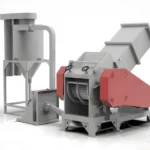
 uPVC Profile & Pipe Granulator
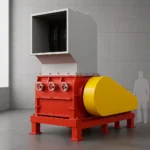 Granulators for Hard Plastics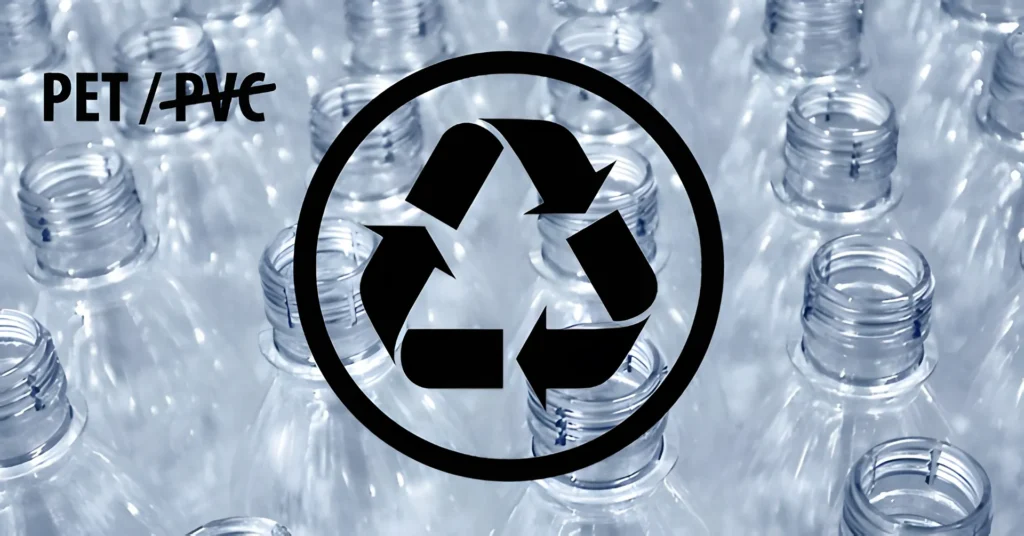
Polyvinyl chloride (PVC), identified by plastic code #3, is one of the most problematic contaminants in the PET recycling industry. Even at minimal concentrations, PVC can cause significant issues during the processing of post-consumer PET resins into new products. For instance, PVC contamination can have negative effects at concentrations as low as 50 parts per million (ppm).
This 50 ppm represents an extremely small amount—only 0.05 kg of PVC plastic within 1,000 kg of PET flakes, or 0.005% by weight. Despite this seemingly negligible concentration, PVC can form acids that physically and chemically break down PET resins, making them brittle and giving them a cloudy tint—two of the most critical properties for PET products: clarity and tensile strength. Moreover, the recycling of PVC releases chlorine gases, posing another significant hazard.
Sources of PVC Contamination in PET Recycling
For PET washing and recycling plants, it is essential to control the concentration of PVC in the PET flakes they produce. The tolerances for PVC are primarily determined by the end application of the recycled PET. While some applications can tolerate higher PVC levels, high-quality products, such as top-grade polyester fibers, require PVC levels much lower than 50 ppm. To meet the stringent requirements of these high-quality applications and secure premium prices, PET recyclers must make extra efforts to remove PVC from the PET flakes. Understanding how PVC enters the PET recycling stream is the first step in this process.
PVC contamination generally originates from four primary sources:
- PVC Bottles That Look Like PET: These bottles leave a white “crease” marking when they are crushed flat, making them identifiable and removable by trained sorters.
- PVC Safety Seals on PET Bottles: Some PET bottles, such as mouthwash bottles, have PVC safety seals that must be removed before the granulation process.
- PVC Liners in Bottle Caps and Closures: Although this is not common in the US, bottles with PVC liners occasionally appear in the recycling stream.
- PVC Labels on PET Bottles: PVC liners wrapped around PET bottles contribute to contamination and must be removed before processing.
Effective PVC Removal Techniques in PET Recycling
Although recycling machines play a crucial role in filtering out PVC from PET bottles, manual sorting remains one of the most effective methods for removing contaminants. Experienced sorters can visually identify and remove PVC bottles, but technology has improved the efficiency of manual sorting.
UV Lighting for Enhanced Sorting Efficiency: A promising innovation is the use of ultraviolet (UV) light to assist in sorting. When PET bottles pass under UV light, they absorb the rays and emit a characteristic blue fluorescence. PVC bottles, due to certain additives, often emit a green or yellow fluorescence, making them easily distinguishable. This method has increased sorting accuracy to 99%. However, due to the potential danger of prolonged UV exposure, sorters must work in shifts of 2 hours to ensure safety.
In addition to manual sorting, automatic sorting systems are becoming increasingly popular, especially as labor costs rise. These systems are usually categorized into three types: steeds populairder, vooral door de stijgende arbeidskosten. Deze systemen worden meestal gecategoriseerd in drie typen:
- Optical Sorting Systems: These systems utilize advanced cameras and sensors to detect PVC contamination based on visual characteristics.
- Transmission Technology Systems: These systems analyze the chemical properties of the material to identify PVC.
- Surface Scanning Systems: These systems use sensors to scan the surface of materials for differences that indicate PVC contamination.
Of these technologies, X-ray technology is the most reliable method, as it can detect the presence of chlorine in PVC, which is absent in PET bottles. Although both manual and automatic sorting systems are very effective, they are not perfect. It is often advantageous to perform multiple sorting rounds (2-3) to achieve the lowest possible levels of PVC contamination.
Hoewel zowel handmatige als automatische sorteersystemen zeer effectief zijn, zijn ze niet perfect. Het is vaak voordelig om meerdere sorteerrondes (2-3) uit te voeren om de laagst mogelijke niveaus van PVC-verontreiniging te bereiken.
Alternative PVC Removal Methods
In addition to sorting, we offer cost-effective alternatives for removing PVC from PET flakes with thermal and electrostatic separation. Thermal Separation en Electrostatic Separation : In this process, the PET/PVC mixture is guided through a charging chamber, where an electrical charge is applied to the plastic. Due to differences in physical and chemical properties, PVC becomes negatively charged, while PET becomes positively charged. The charged plastics are then separated by poles of opposite polarity.
- Thermische Scheiding: PVC wordt zacht bij ongeveer 200°C, terwijl PET stabiel blijft tot 260°C. Door de kunststofmix op een draaiende transportband op 180-200°C te verhitten, hecht PVC zich aan de band, terwijl PET ongestoord blijft en wordt opgevangen in een aparte container. Een stationair mes schuurt vervolgens de PVC ervan af. Deze methode is kosteneffectief en effectief voor het scheiden van de twee kunststoffen.
- Electrostatische Scheiding: In dit proces wordt de PET/PVC-mix door een laadkamer geleid, waar een elektrische lading op het plastic wordt aangebracht. Vanwege verschillen in fysische en chemische eigenschappen wordt PVC negatief geladen, terwijl PET positief wordt geladen. De geladen kunststoffen worden vervolgens gescheiden door middel van polen van tegenovergestelde polariteit.
Conclusion
Understanding the challenges posed by PVC contamination in PET recycling is essential to ensure high-quality products. Since buyers of PET flakes are particularly concerned about the PVC content, it is crucial to implement effective PVC removal strategies. The testing of the PVC content must always be carried out to ensure the highest quality PET flakes are offered to customers. Even small amounts of PVC can render an entire batch of PET flakes unusable.
As a general rule: aim for a PVC content below 50 ppm, preferably below 30 ppm. With the methods described in this article, it is possible to significantly reduce PVC contamination, but ultimately, it is up to the operator of the PET recycling plant to choose and implement the correct system based on the characteristics of the incoming PET bottles.

 English
  Dutch
Dutch  Polish
  Italian
  German
  French
  Spanish